Finding Treasure
A Social Studies lesson suitable for grades 5-8.
The Reading
“Treasure!” What does that word conjure up for you? A creaky wooden chest smelling of the ground? Pearls and gold coins and jewels that gleam when the lid is lifted after centuries? Treasure seems to be something that exists only in novels or movies or theme parks, but it exists in real life, and sometimes kids are the ones to find it.
Here are some examples of kids finding real treasure:
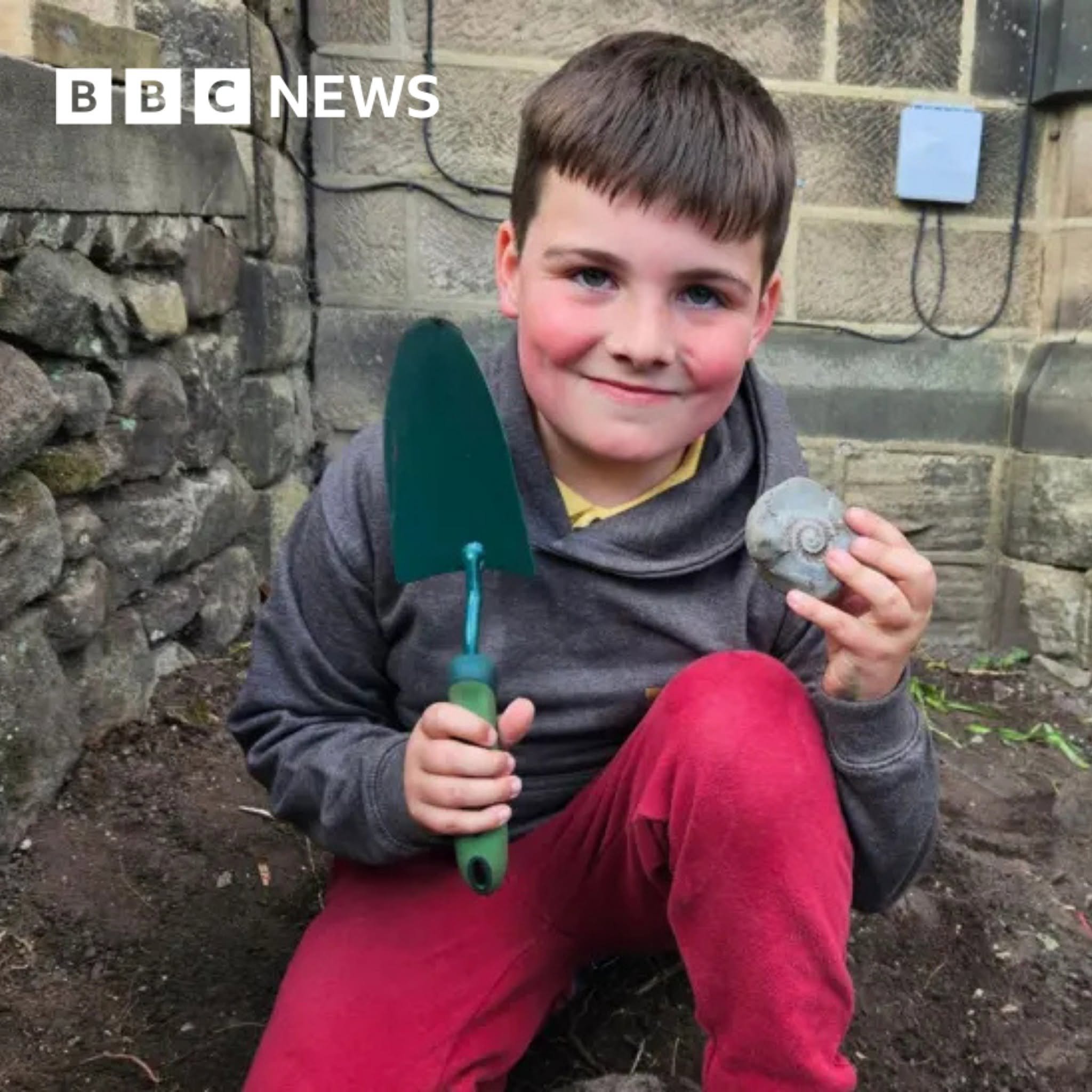
A 7 year old discovered a 140 million year old fossil while digging in his yard. In this case, the treasure was not coins or jewels but fossils. These particular fossils, ammonites, are coiled sea creatures whose body disappears but whose shell hardens so that it is preserved. In this case, they are about 140 million years old. While Elliott’s ammonites might be worth money, for Elliott they are “cool,” in and of themselves, as is the act of discovering them.
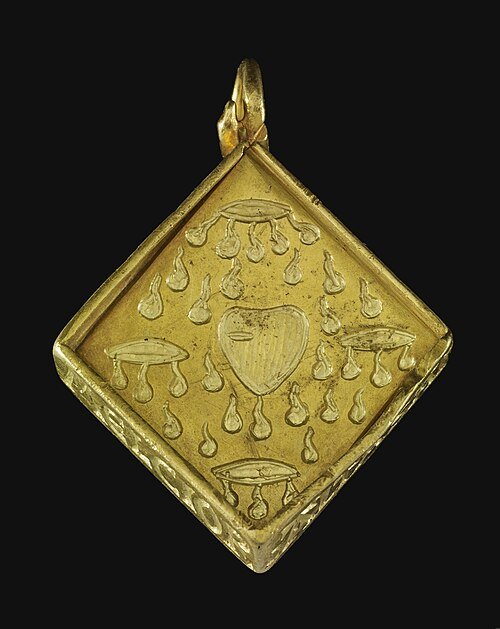
A 4 year old was sweeping his dad’s metal detector over the ground in Essex, UK and found a 16th century gold pendant. The pendant was not found far underground, maybe 6-8 inches. It was a gold pendant with a compartment inside. The family turned the pendant over to a museum, which opened the pendant and found some flax inside. Flax is the plant that makes linen, a fabric. Some people speculate that perhaps the pendant contained a religious relic. The pendant itself is beautifully decorated. This treasure is beautiful, suggesting its value as art, as well as money.
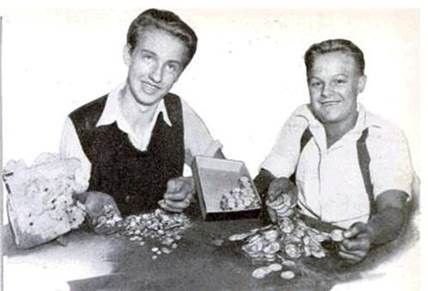
In the US nearly 100 years ago in 1934, a 15 and 16 year old were burying “secret” supplies for their club when they struck containers that contained 3558 thousand gold coins minted before 1857. How did the coins get there? Who put them there? Some researchers believe that perhaps a sea captain buried them there, or that someone buried them around the Civil War, which began in 1861. For these boys, who were very poor, and who found the coins during the Great Depression, the coins were important because they could sell them and then give the money to their mothers.
Each of these discoveries certainly brought the finders some fame and money, but the treasures themselves speak to different ways we value treasure, and equally important, each discovery adds knowledge to different fields.
For the ammonite discovery, the knowledge gained falls into the study of geology and paleontology, but some think that the fossils were brought from elsewhere, so that might include history: geology suggests where the fossils might have originated. Paleontology helps us know what creature is in the fossil. History might help explain how these particular fossils ended up in Elliott’s garden and might tell us about where and when people were finding ammonites and why they were so interested.
The metal detector example opens the pathway to knowledge about science, including how metal detectors work (electromagnetic fields!), and the actual discovery leads us to a variety of fields including economics (who could afford such a beautiful pendant?) as well as who would have made it and where the gold would have come from, art (why those particular designs?) and religion (what were the religious practices of the day? Did the pendant function as an amulet?) and anthropology, which might explore the function of the pendant.
And finally, the stories of the boys in Baltimore who dug up the hidden coins links to economics, because of the effect of the Depression, and history, knowing about the Depression and the history of Baltimore might help people figure out who put the coins there in the first place. And if you’re really focused on who ended up with how much money, then you might need knowledge about law and ownership that governs found treasure.
The Lesson
Now that you’ve read some examples of treasure—and know from the links above that what counts as treasure is legally defined in most countries—let’s take a step back and think about treasure and you.
Answer the following questions:
If you look around your house or your room or your neighborhood, what do you see that you consider treasure?
In your answers to all of the questions, be as detailed as possible. If you’re describing a box, for instance, what is it made of? What are its dimensions? And so on.
Name the treasure
Describe the treasure
Explain why it is treasure to you. By beginning with something specific, and explaining how it is treasure (1 and 2 above), you can begin to generate a more general definition of treasure (this is inductive reasoning). The other alternative is to begin with the general definition and then apply it to something specific (deductive reasoning).
Given the object you have chosen, what approach do you want to take to explore more about the object (geology, palentology, economics, history, art, religion, law)?
Write a pretend Wikipedia entry about your treasure. Make sure you include the information above. Using the approach you named in 5, research your treasure. Use between 3-5 sources to help you—and your reader—understand your object.
Make sure you include a conclusion that tells us how and why your object, and your research, are important.